A place with its own rhythm.
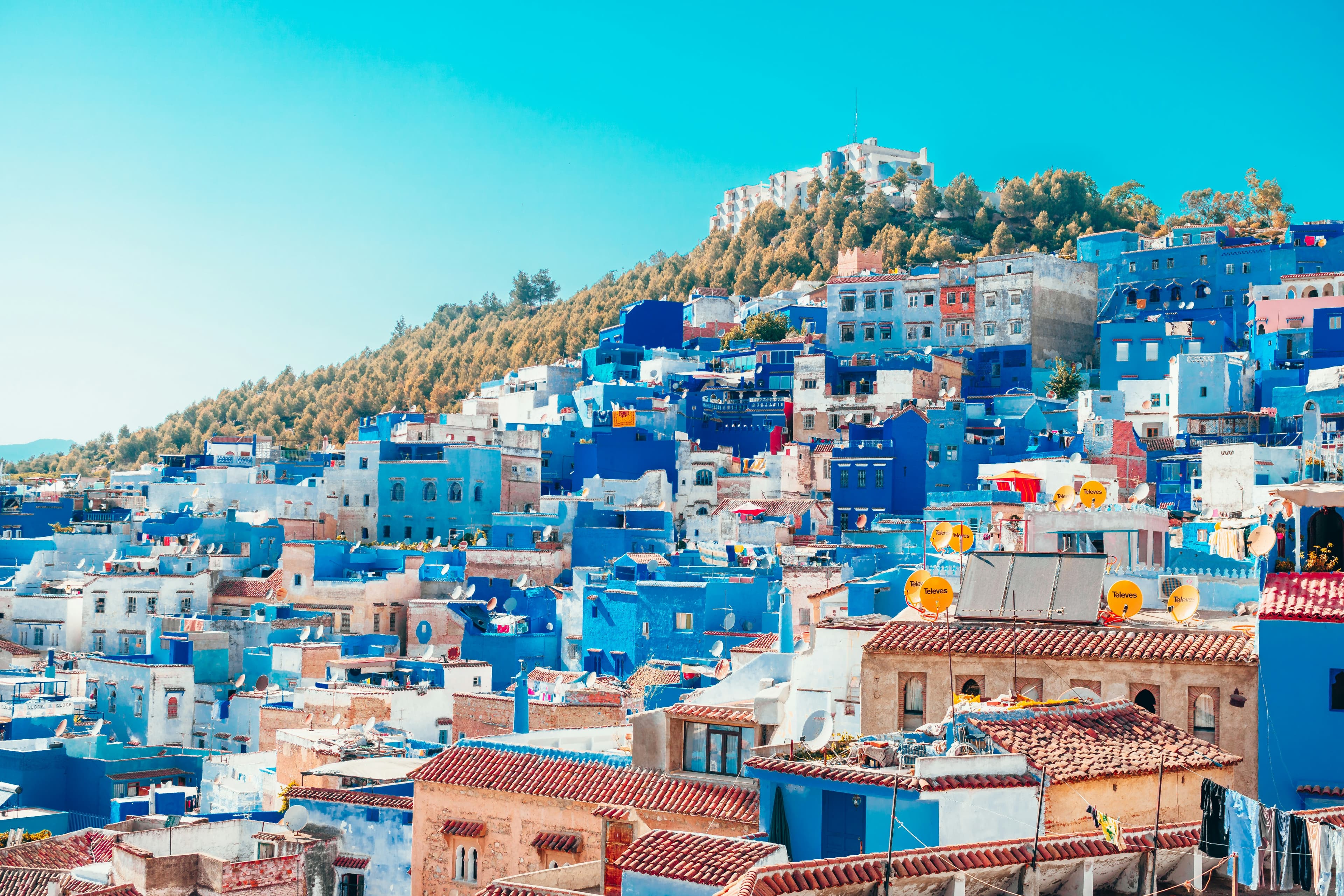
Chefchaouen is painted blue, and nobody entirely agrees why. Some say Jewish refugees brought the custom in the 1930s; others that the colour keeps mosquitoes away, or simply keeps the walls cool. The town itself seems content to let the question stand. It was founded in 1471 as a fortress against Portuguese incursions, and for centuries it was closed to outsiders — Christians who entered risked death. That isolation is still legible in the architecture: red-tiled roofs more Andalusian than Moroccan, a legacy of the Muslims and Jews who arrived here after being expelled from Spain. The medina is small enough to walk in an hour and good enough to walk for three days. Stairways climb between walls of a dozen different blues, cats sleep in doorways, and the Rif mountains close the view at the end of every lane. The Spanish Mosque on the hill opposite is a twenty-minute climb and the best place to watch the town turn gold at sunset. Goat cheese, wool blankets and woven djellabas are the local crafts. The pace is slower than anywhere else on a Moroccan itinerary, and that is the point.
Journeys that visit here
Available trips
The destination
Moments from Chefchaouen
Where to stay
Accommodations in Chefchaouen
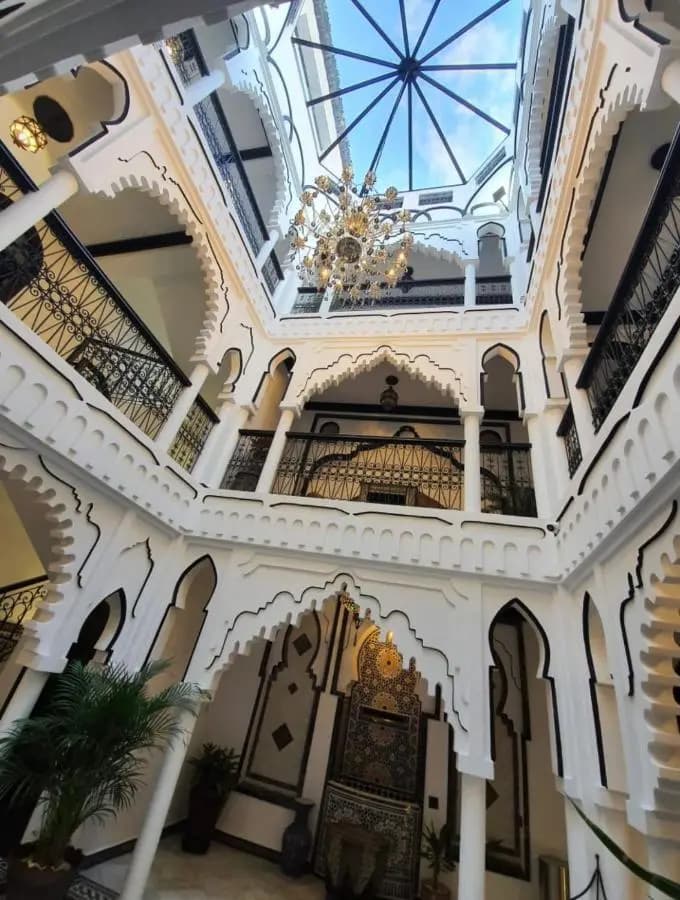
Riad El Palacio & Spa
Riad · Chefchaouen
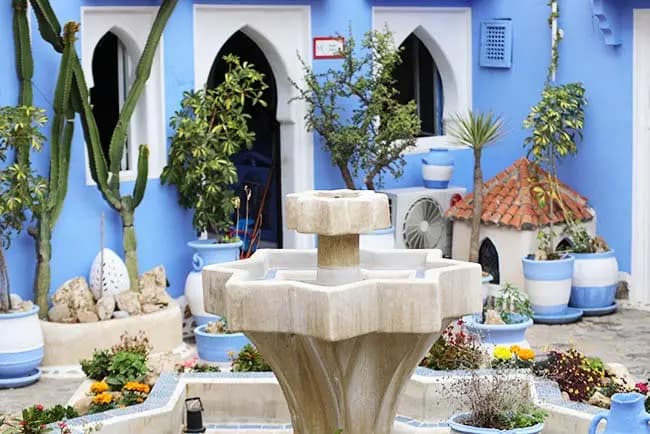
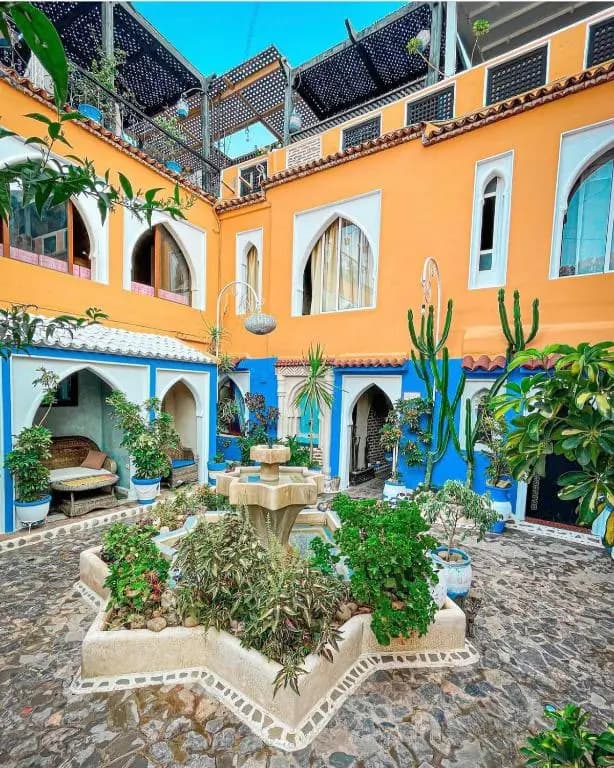
Riad El Palacio & Spa is on Rue Gharnati in Chefchaouen’s Andalous quarter. The accommodation includes air-conditioned rooms with private bathrooms, and guests can use a terrace.
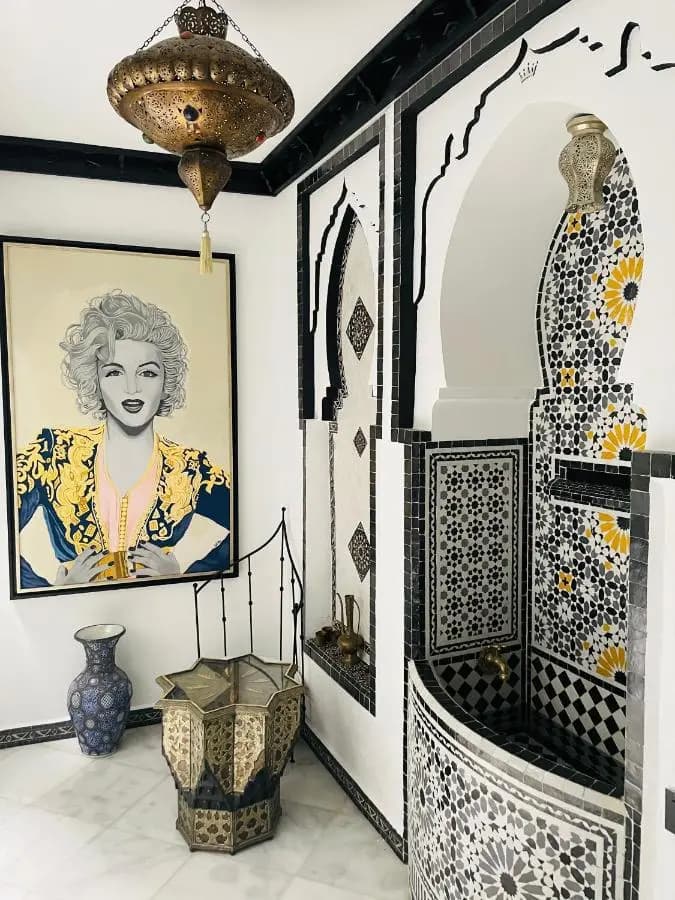
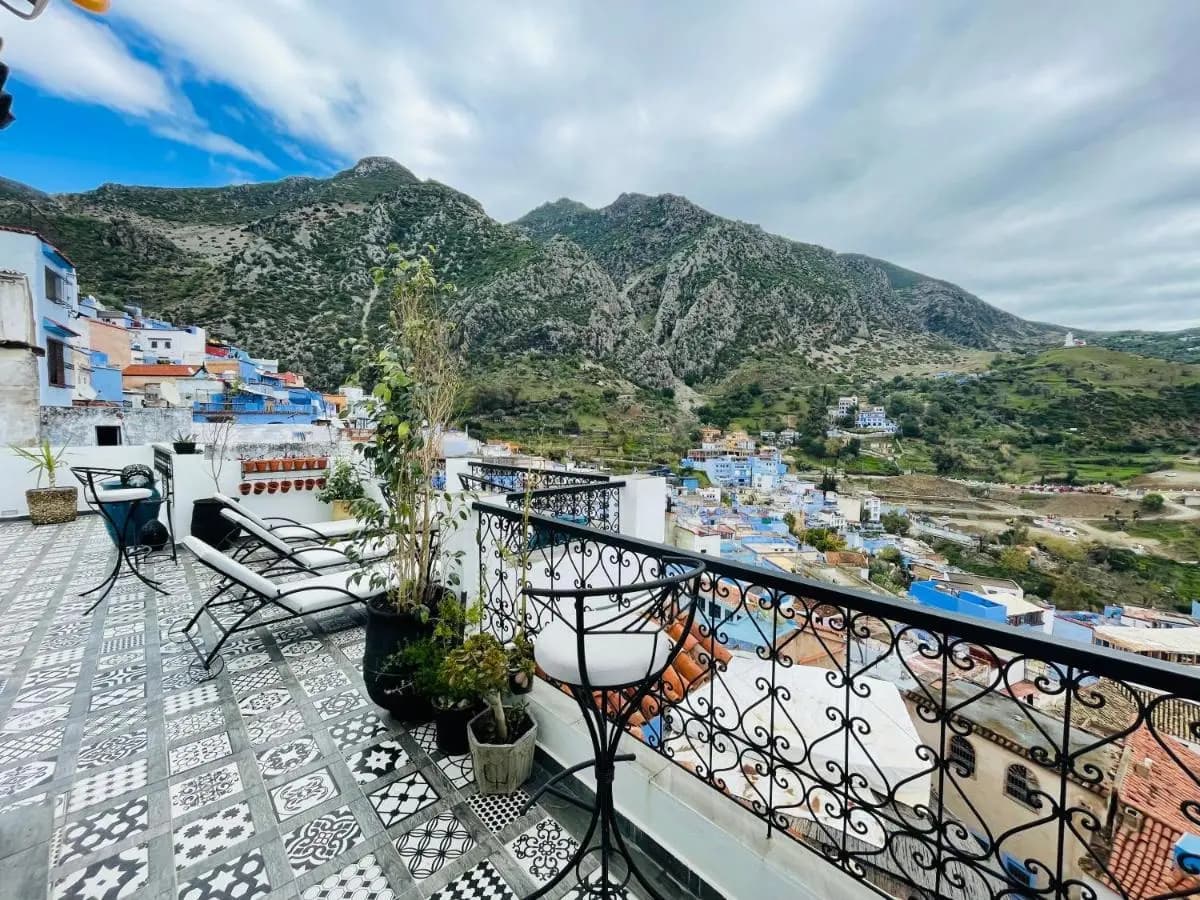
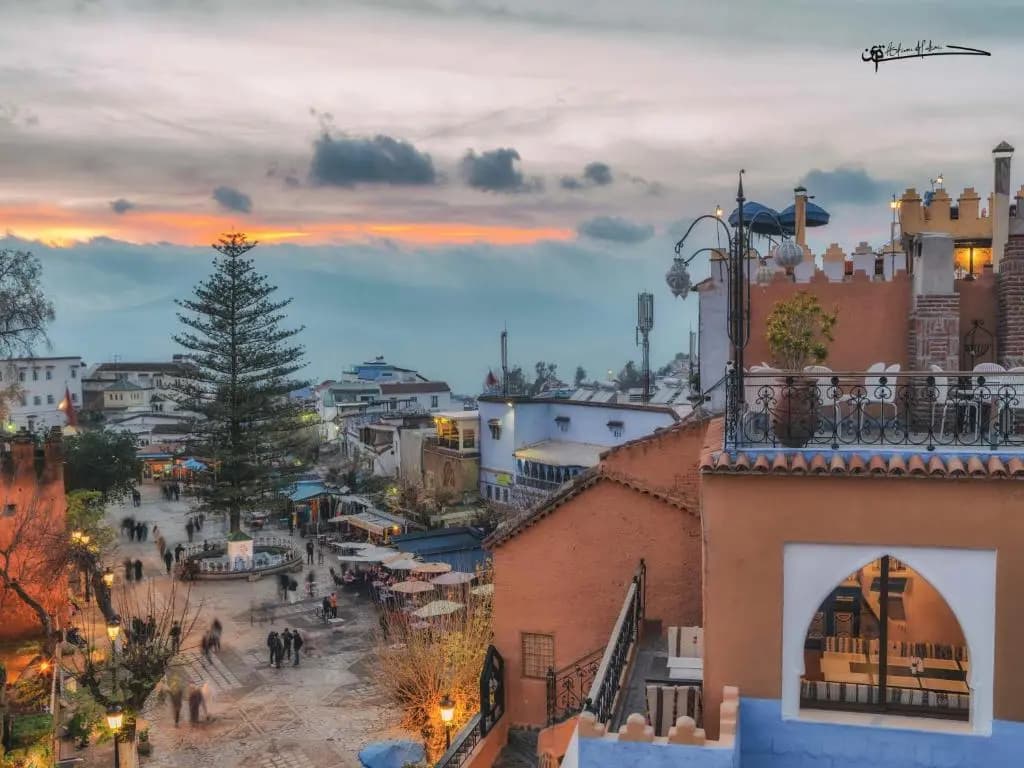
Riad Hicham
Riad · Chefchaouen
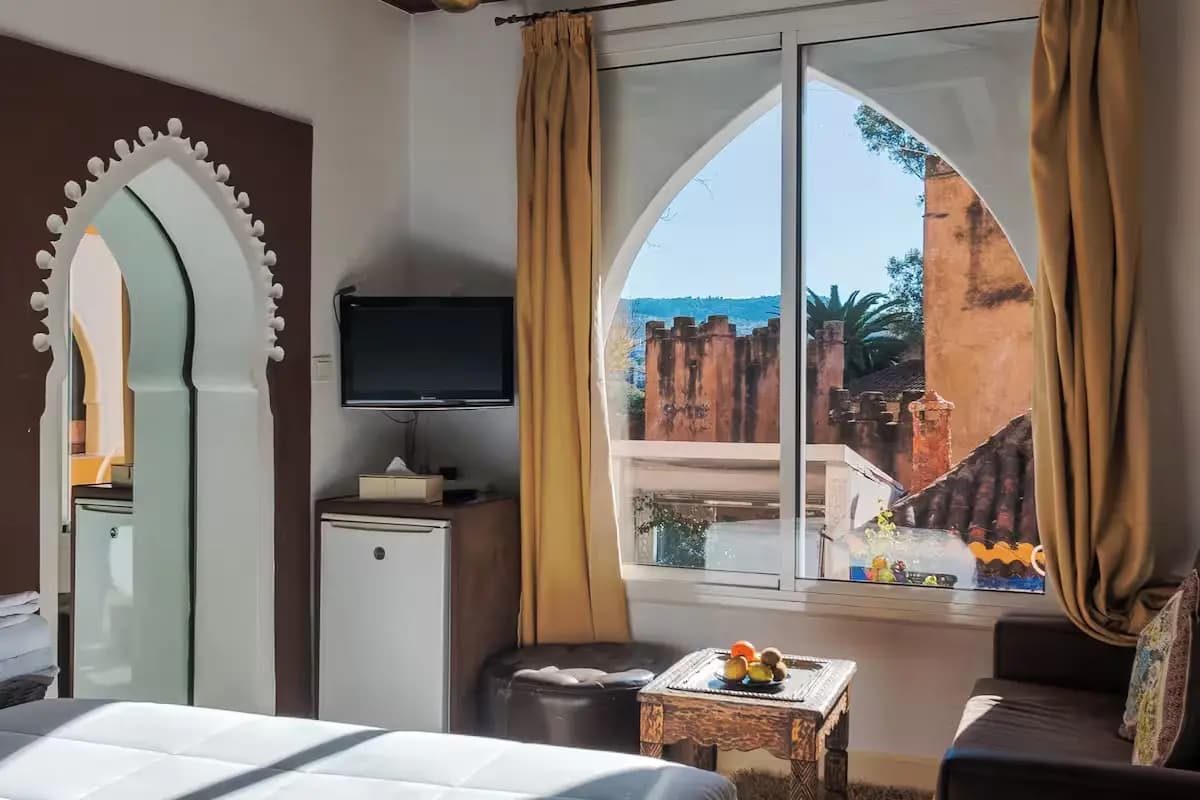
Riad Hicham offers accommodation on Place Outa Hammam in Chefchaouen. The property combines guest rooms with an on-site restaurant and a roof terrace overlooking the medina. Air conditioning and a private bathroom are provided in the rooms. Selected rooms also include a terrace.