Discover Morocco
From ancient medinas and blue mountain towns to Atlantic coastlines and golden desert landscapes.
12
Destinations
11
Featured
4
Landscapes
∞
Stories
The Morocco between the landmarks
Morocco moves from the hush of the Rif Mountains to the rhythm of imperial medinas, across Atlas passes and down to the Sahara. Choose a place, then let the journey unfold.
Featured destination
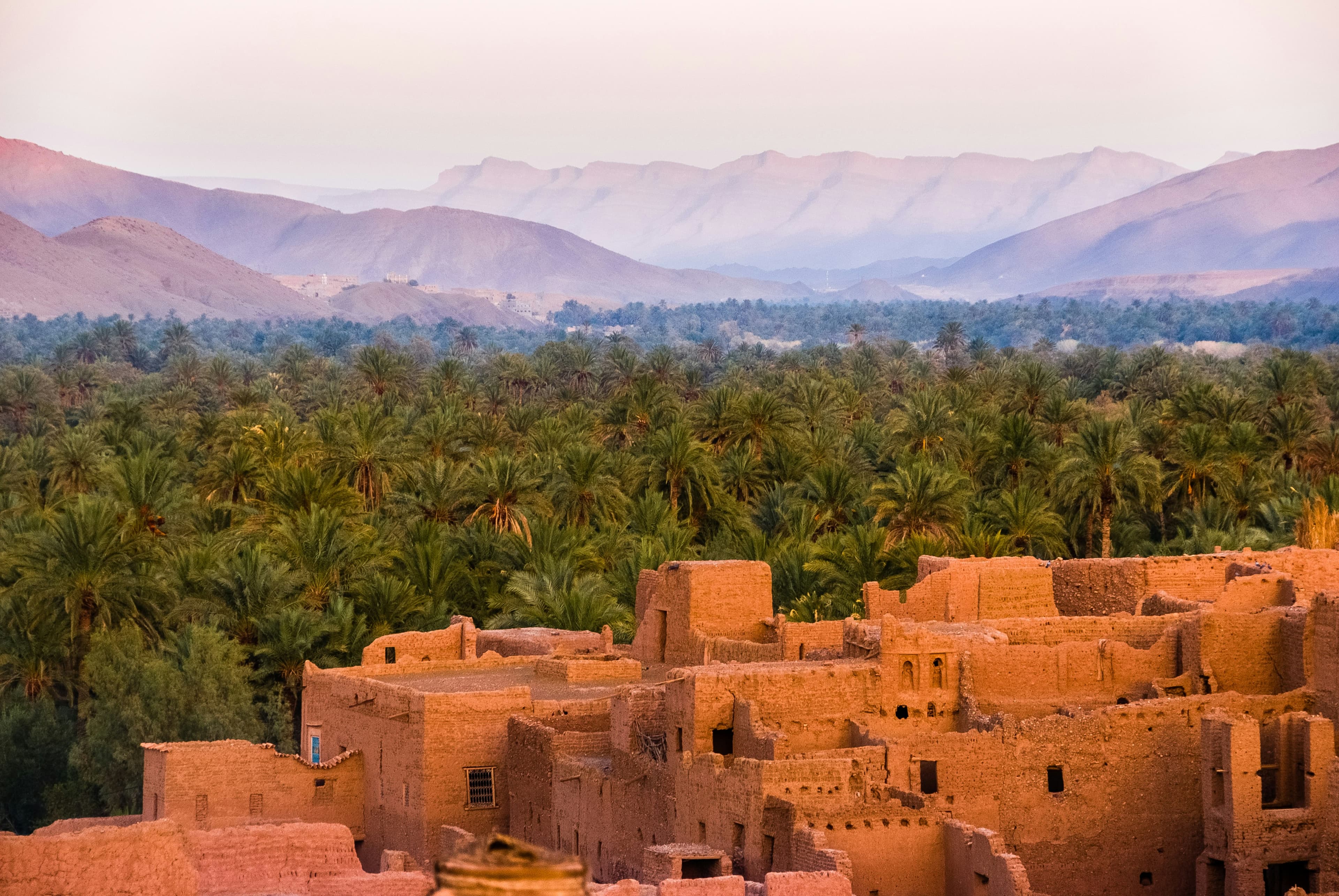
Agdz is where the Draa begins to be inhabited. Coming south from Ouarzazate the land is stone and glare, and then the road drops and the valley opens: palm groves, terraced plots along the river, villages the same color as the ground they stand on. Jbel Kissane rises over the town, and the road carries on down the valley toward Zagora. Caravans came this way, north from Timbuktu. The market still gathers farmers and traders from the villages around — dates, spices, cloth, livestock. The Caid's Kasbah in town is a complex of rooms and terraces built from mud brick; nearby Tamnougalt is a whole settlement of earthen walls standing at the edge of the palms.
Choose your direction
Wander through ancient medinas, cross mountain valleys, follow the Atlantic coast or sleep beneath the stars of the Sahara.
Agdz is where the Draa begins to be inhabited. Coming south from Ouarzazate the land is stone and glare, and then the road drops and the valley opens: palm groves, terraced plots along the river, villages the same color as the ground they stand on. Jbel Kissane rises over the town, and the road carries on down the valley toward Zagora. Caravans came this way, north from Timbuktu. The market still gathers farmers and traders from the villages around — dates, spices, cloth, livestock. The Caid's Kasbah in town is a complex of rooms and terraces built from mud brick; nearby Tamnougalt is a whole settlement of earthen walls standing at the edge of the palms.
Explore destination →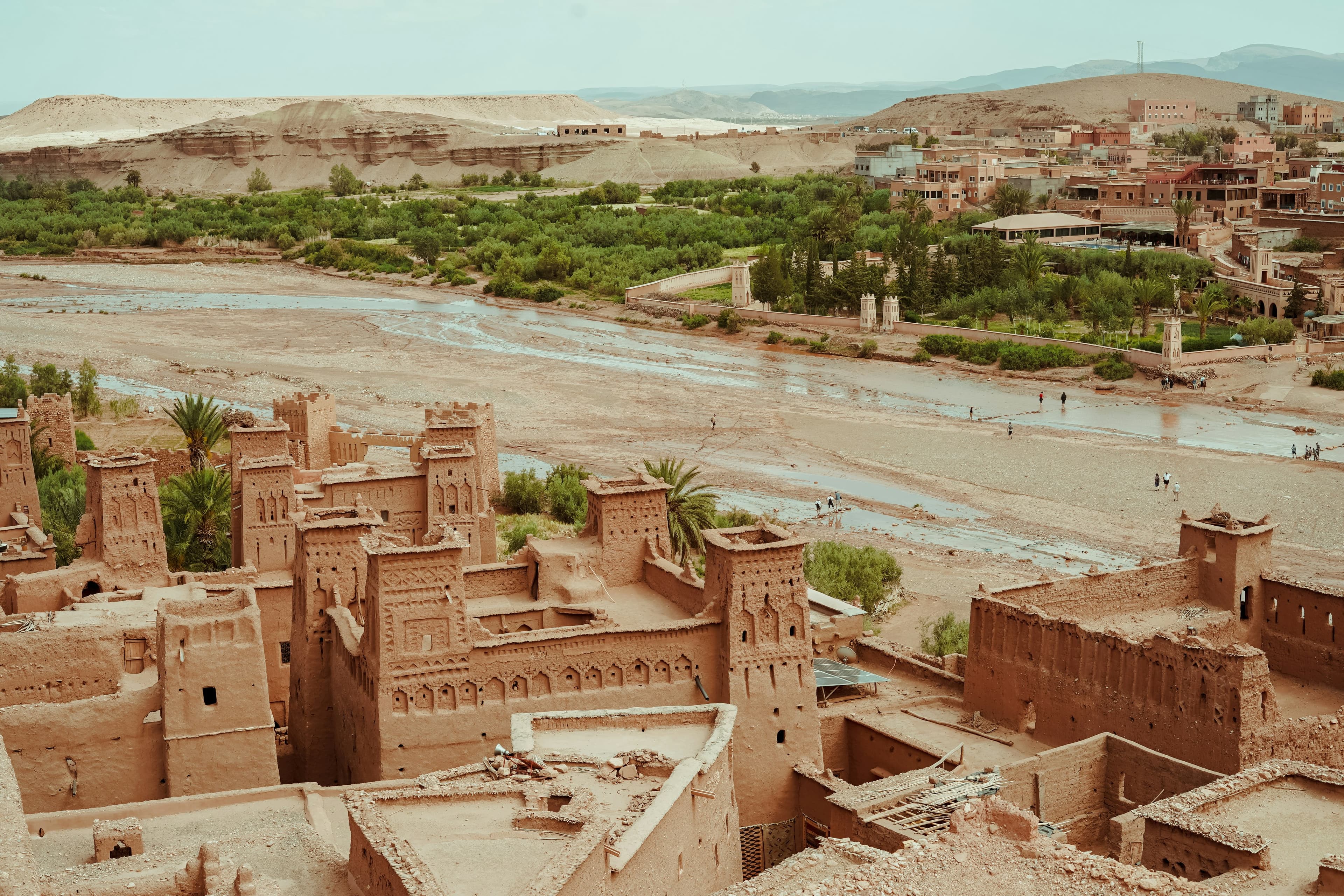
Ait Ben Haddou is a ksar — a fortified village of packed earth — stacked against a hillside above the Ounila river, and it is the most photographed place in southern Morocco for a reason. Towers rise in tiers, each house defending the one below, the whole mass the same red-brown as the ground it stands on. It grew on the caravan route between the Sahara and Marrakech, and the earliest surviving buildings date from the seventeenth century, though the site is far older. UNESCO listed it in 1987 as an outstanding example of southern Moroccan earthen architecture. That architecture is also its fragility. Rammed earth and adobe need constant maintenance; a heavy rain can take a wall. A handful of families still live inside, and restoration is continuous. Film crews have used it since the 1960s — Lawrence of Arabia, The Last Temptation of Christ, Gladiator, Game of Thrones — and some of what you see was built for a camera. Guides will tell you which is which. Cross the river, climb to the granary at the summit, and look back down the valley. Late afternoon is the hour: the earth goes copper and the shadows cut between the towers.
Explore destination →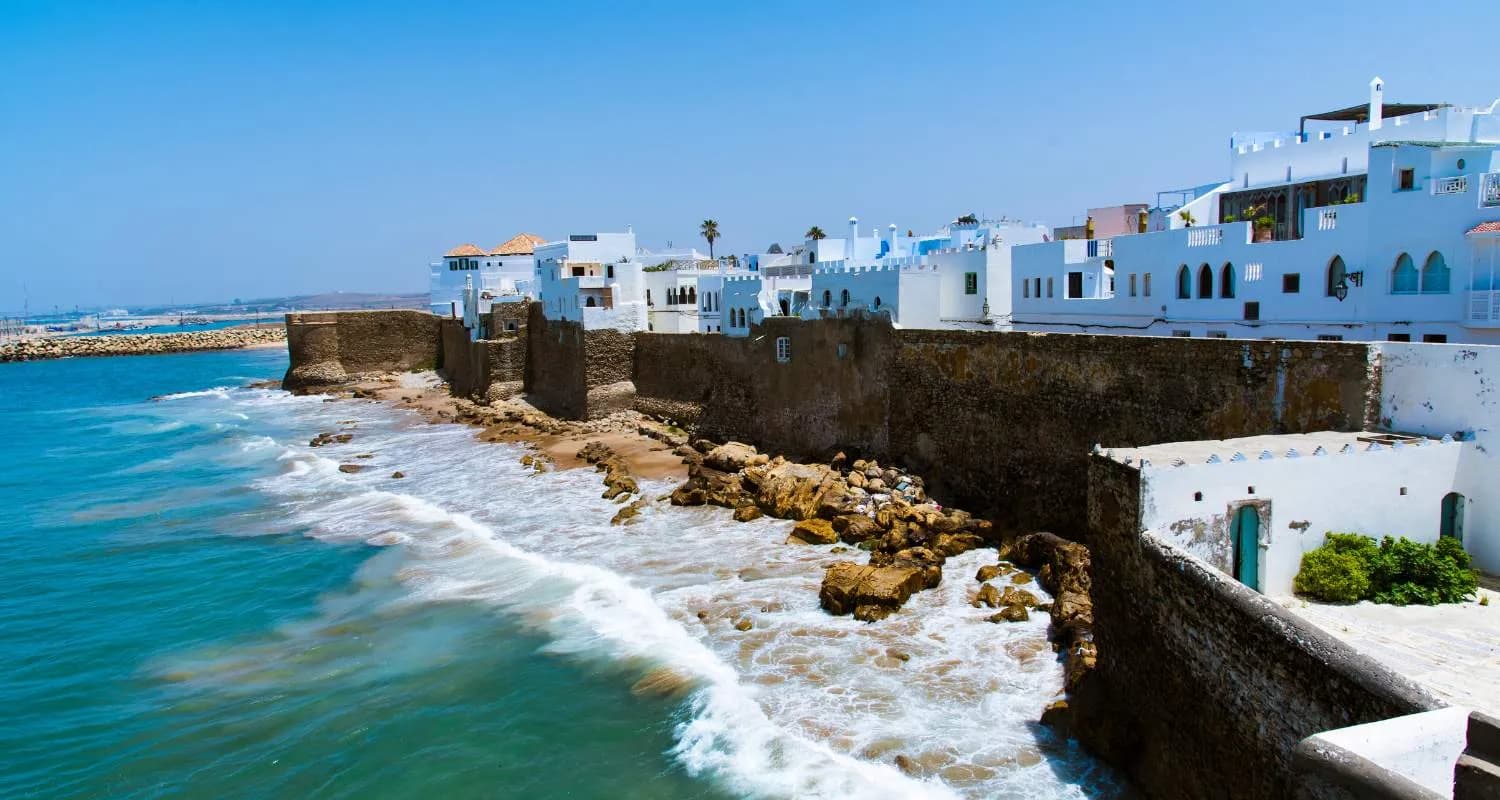
Asilah puts paintings on the walls of its medina, among whitewashed houses picked out in blue and green. Portuguese bastions and towers follow the Atlantic shore: town on one side of the fortifications, ocean on the other. Portugal held Asilah as a trading port. The harbor and market remain, and fishing still gives the town work. The murals by local artists were introduced during a project that restored fortifications and a palace, repaired houses and improved public spaces. The cultural festival brings performances and music to town.
Explore destination →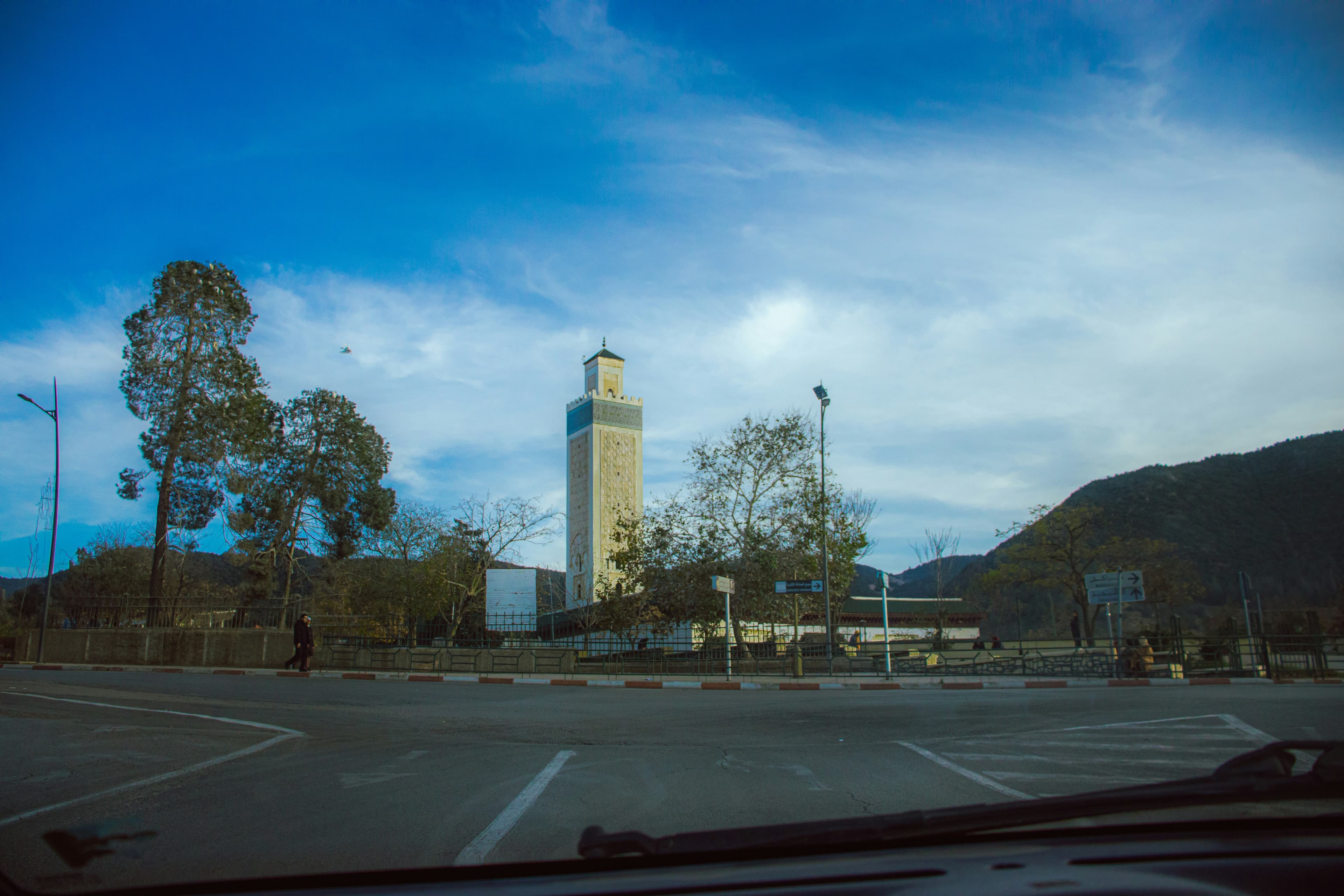
Carpet shops gather around Azrou's main square. The rugs come from the weaving traditions of the surrounding Amazigh communities, in a market town beside the cedar forests of the Middle Atlas. Roads bring Azrou into contact with Meknes, Ifrane and Khenifra. At the handicraft center, workers shape cedar wood and weavers make Bni Mguild rugs. Azrou means rock in Amazigh. Its kasbah is associated with Moulay Ismail. The neighboring Ifrane National Park supports Barbary macaques, and wooded slopes outside town are walking country.
Explore destination →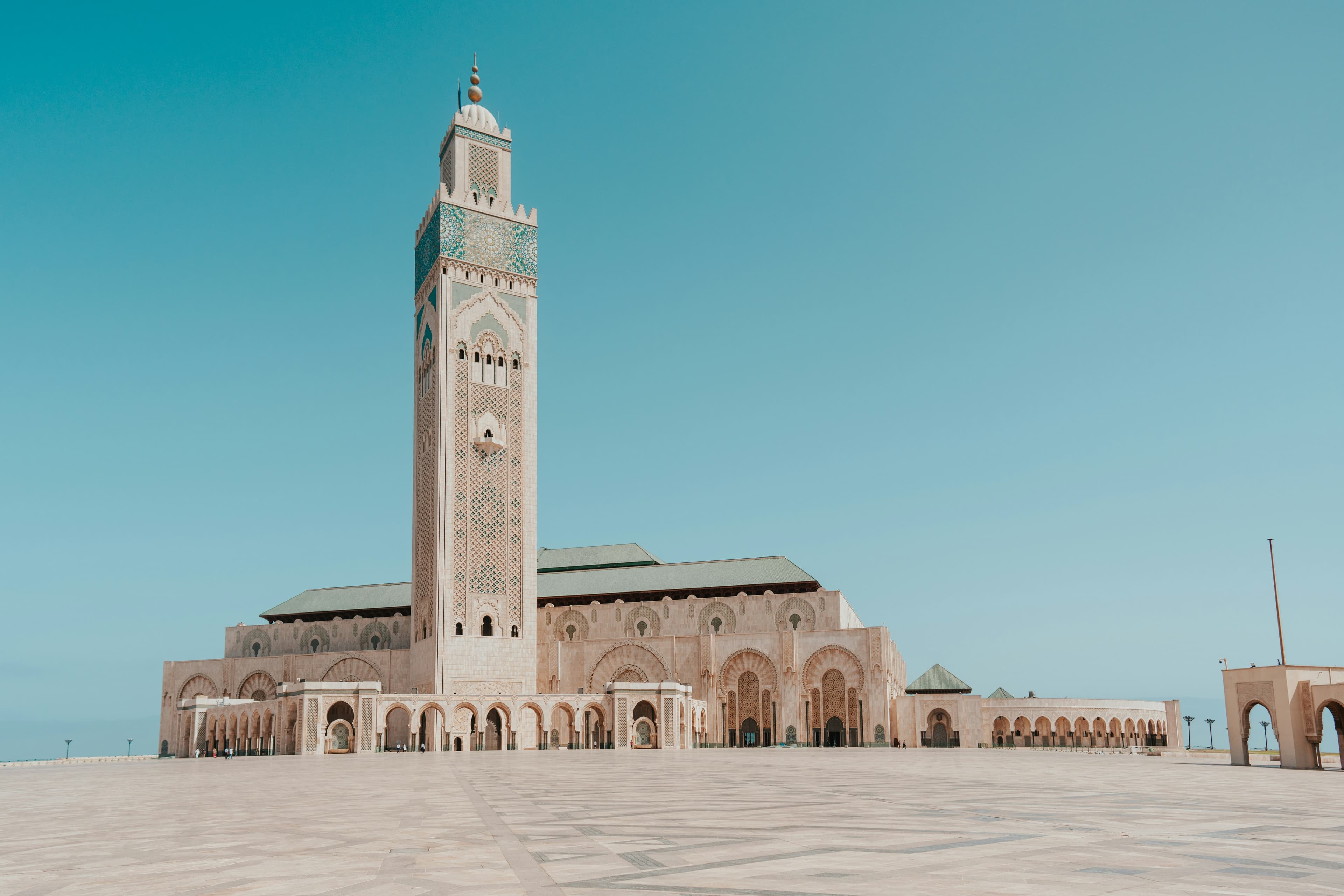
Casablanca is where Morocco goes to work. It is the country's largest city, its port, its stock exchange and its industrial engine — and it wears none of the costume that visitors expect. There are no souks performing for cameras here. There is a working city of five million people, and that is precisely what makes it interesting. What it has instead is architecture. Between the 1910s and the 1950s, French and Moroccan architects built an entire downtown in a style found almost nowhere else: Art Deco geometry married to Moorish arches, zellij tilework and carved plaster. Boulevard Mohammed V and the streets around Place des Nations Unies are an open-air museum of it, faded and still inhabited. The Hassan II Mosque is the other reason to stop. Completed in 1993, it stands partly over the Atlantic, its minaret the tallest in the world at 210 metres, and it is one of the few mosques in Morocco that non-Muslims may enter on a guided visit. The craftsmanship inside — cedar, marble, hand-cut tile — was done by six thousand Moroccan artisans. Most itineraries begin or end here, because the international airport is close. Give the city an afternoon rather than treating it as a transfer.
Explore destination →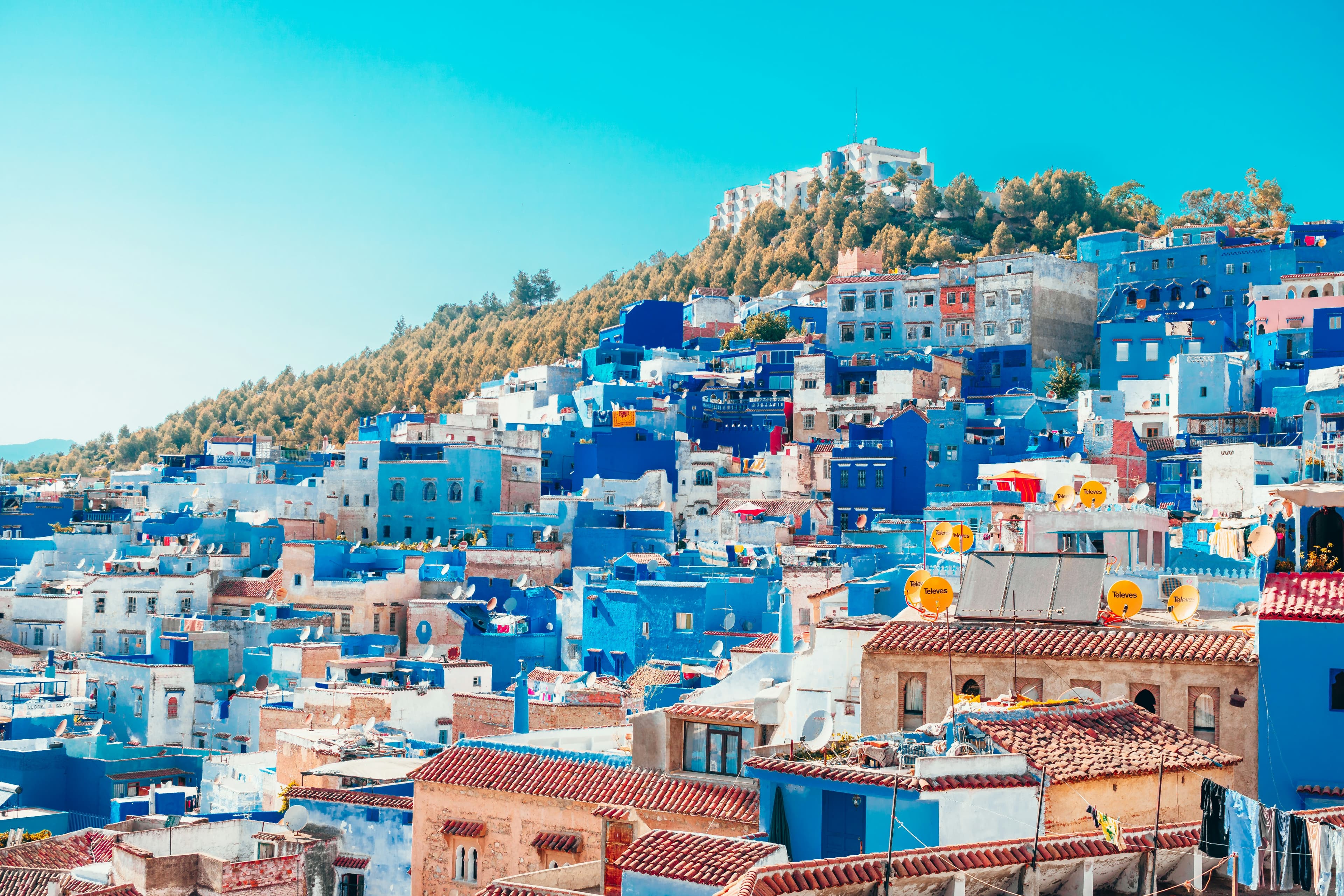
Chefchaouen is painted blue, and nobody entirely agrees why. Some say Jewish refugees brought the custom in the 1930s; others that the colour keeps mosquitoes away, or simply keeps the walls cool. The town itself seems content to let the question stand. It was founded in 1471 as a fortress against Portuguese incursions, and for centuries it was closed to outsiders — Christians who entered risked death. That isolation is still legible in the architecture: red-tiled roofs more Andalusian than Moroccan, a legacy of the Muslims and Jews who arrived here after being expelled from Spain. The medina is small enough to walk in an hour and good enough to walk for three days. Stairways climb between walls of a dozen different blues, cats sleep in doorways, and the Rif mountains close the view at the end of every lane. The Spanish Mosque on the hill opposite is a twenty-minute climb and the best place to watch the town turn gold at sunset. Goat cheese, wool blankets and woven djellabas are the local crafts. The pace is slower than anywhere else on a Moroccan itinerary, and that is the point.
Explore destination →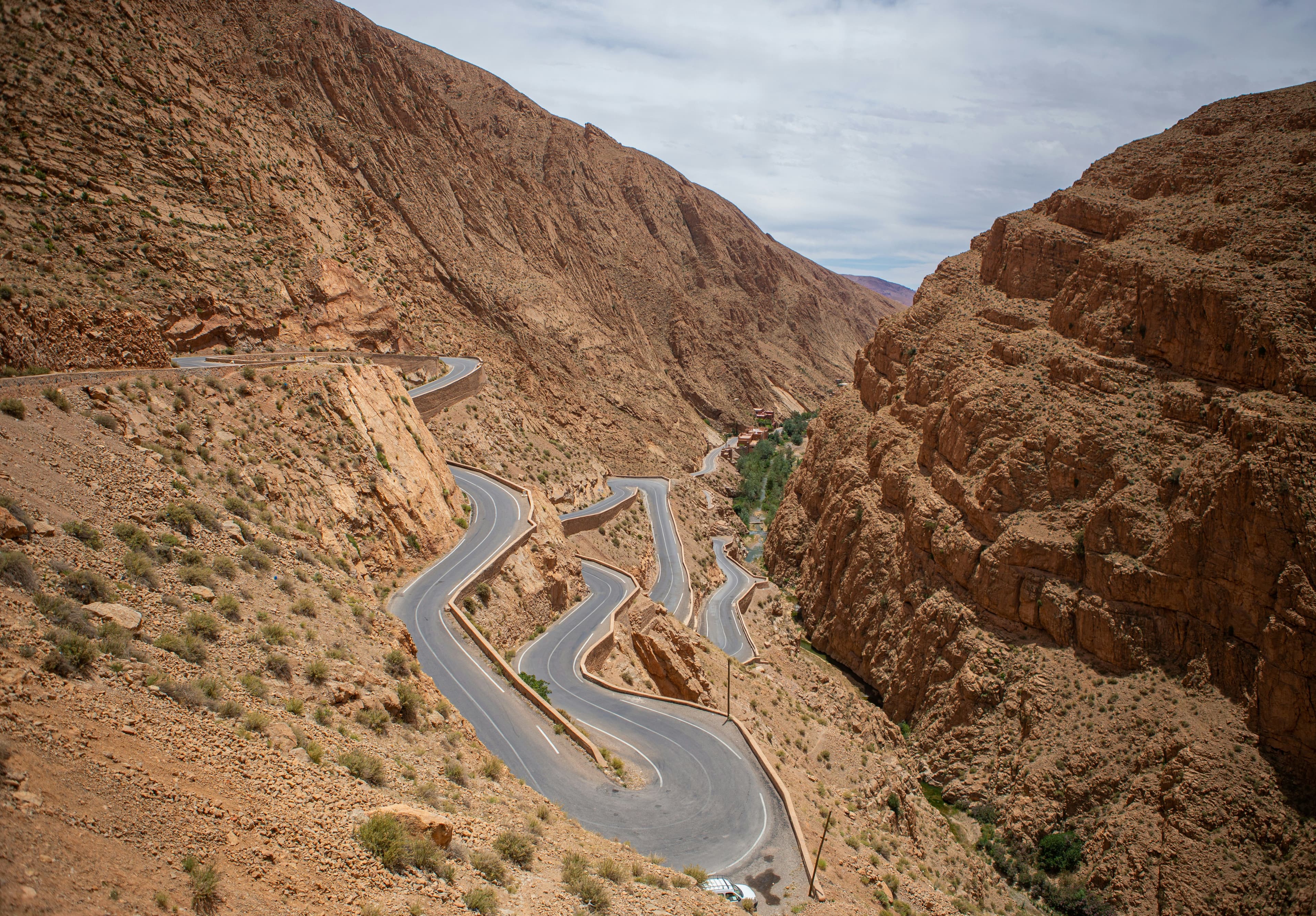
The Dades is the heart of what Morocco calls the Road of a Thousand Kasbahs — the chain of fortified earthen villages that runs along the southern slope of the High Atlas. The number is not far wrong: they appear every few kilometres, the same red as the cliffs behind them, some restored and lived in, many slowly returning to the ground they were built from. The valley floor is a ribbon of green, almonds and figs and walnut trees irrigated by channels that have been maintained by hand for centuries. Above it, the rock takes strange forms: the formations known locally as monkey fingers, and further up, the switchback road that climbs the gorge in a series of hairpins photographed from every angle. Most itineraries stop here for a night between Ait Ben Haddou and the desert, and most travellers wish they had stayed two. Early morning, before the tour buses leave Ouarzazate, the valley belongs to the people who live in it. Spring brings the almond blossom and, further east around Kelaat M'Gouna, the rose harvest in May.
Explore destination →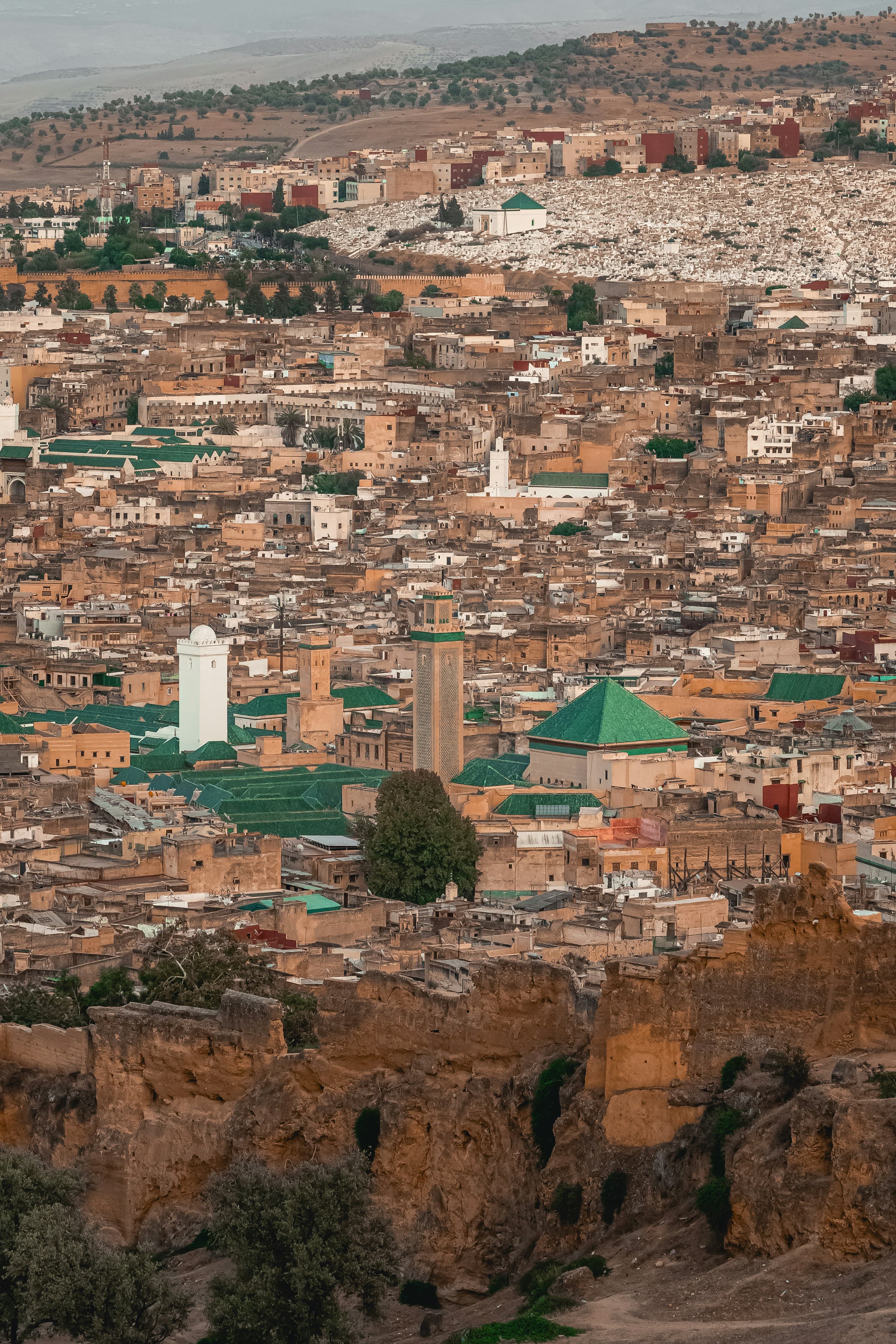
Fez is the Morocco that other Moroccan cities measure themselves against. Founded in the late eighth century and capital for long stretches of the country's history, it holds the oldest continuously running university in the world at al-Qarawiyyin, founded in 859 by a woman, Fatima al-Fihri. Fes el-Bali, the old medina, is the largest car-free urban area on earth. Nine thousand lanes, some barely shoulder-width, and no vehicle that is not a mule or a handcart. Getting lost is not a risk here, it is the method: every wrong turn opens onto a workshop, a fountain, a doorway of carved cedar and painted plaster. The Chouara tanneries have worked the same way since the eleventh century — stone vats of dye and lime, hides turned by hand, the colours visible from the leather shops above. The madrasas of Bou Inania and al-Attarine are small and overwhelming, every surface carved, tiled or written on. Fez is less polished than Marrakech and more demanding. Travellers who give it two days leave frustrated; those who give it four tend to call it the best thing they did in Morocco.
Explore destination →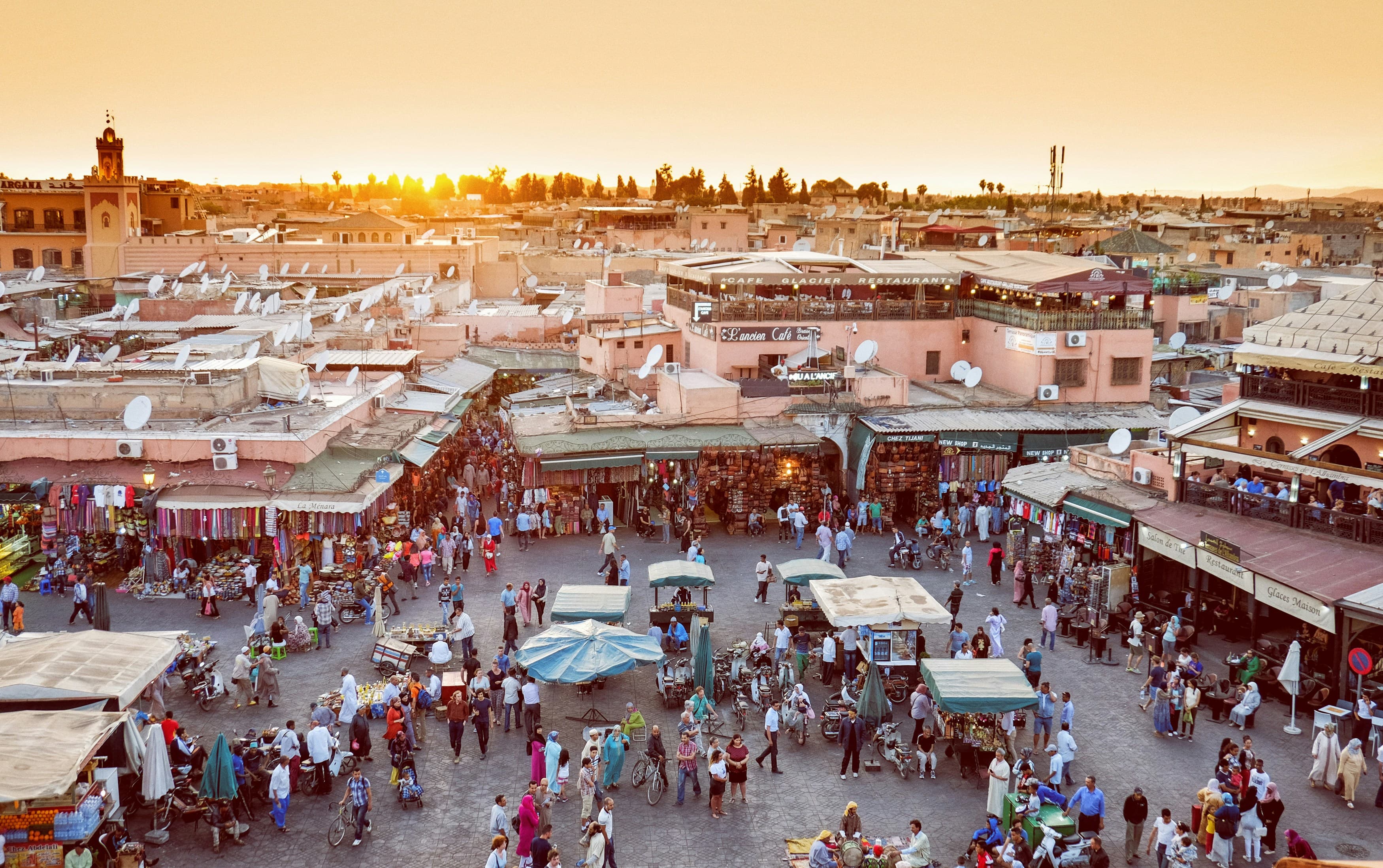
Marrakech does not ease you in. You step through a gate in the red walls and the city arrives all at once: the call to prayer over the rooftops, mopeds threading through alleys too narrow for cars, the smell of orange blossom and charcoal and leather. It has been doing this to travellers since the Almoravids founded it in 1070, and it has never seen a reason to stop. The medina is a thousand years of trade folded into a few square kilometres. Souks are grouped by craft, the way they have always been: dyers in one lane, coppersmiths in another, slipper-makers in a third. The Koutoubia minaret stands above all of it, the template for every tower Morocco built afterwards. At dusk, Jemaa el-Fna fills with smoke, storytellers, musicians and food stalls, and becomes something closer to theatre than to a square. Step through any plain door and the noise stops. A riad turns its back on the street and opens onto a courtyard, a fountain, a square of sky. That contrast — the uproar outside, the stillness within — is the city in one gesture. Beyond the walls: the Majorelle garden in its cobalt blue, the Saadian tombs sealed for two centuries, the Menara olive groves with the High Atlas rising white behind them. The mountains are ninety minutes away, and on a clear winter morning they look close enough to touch.
Explore destination →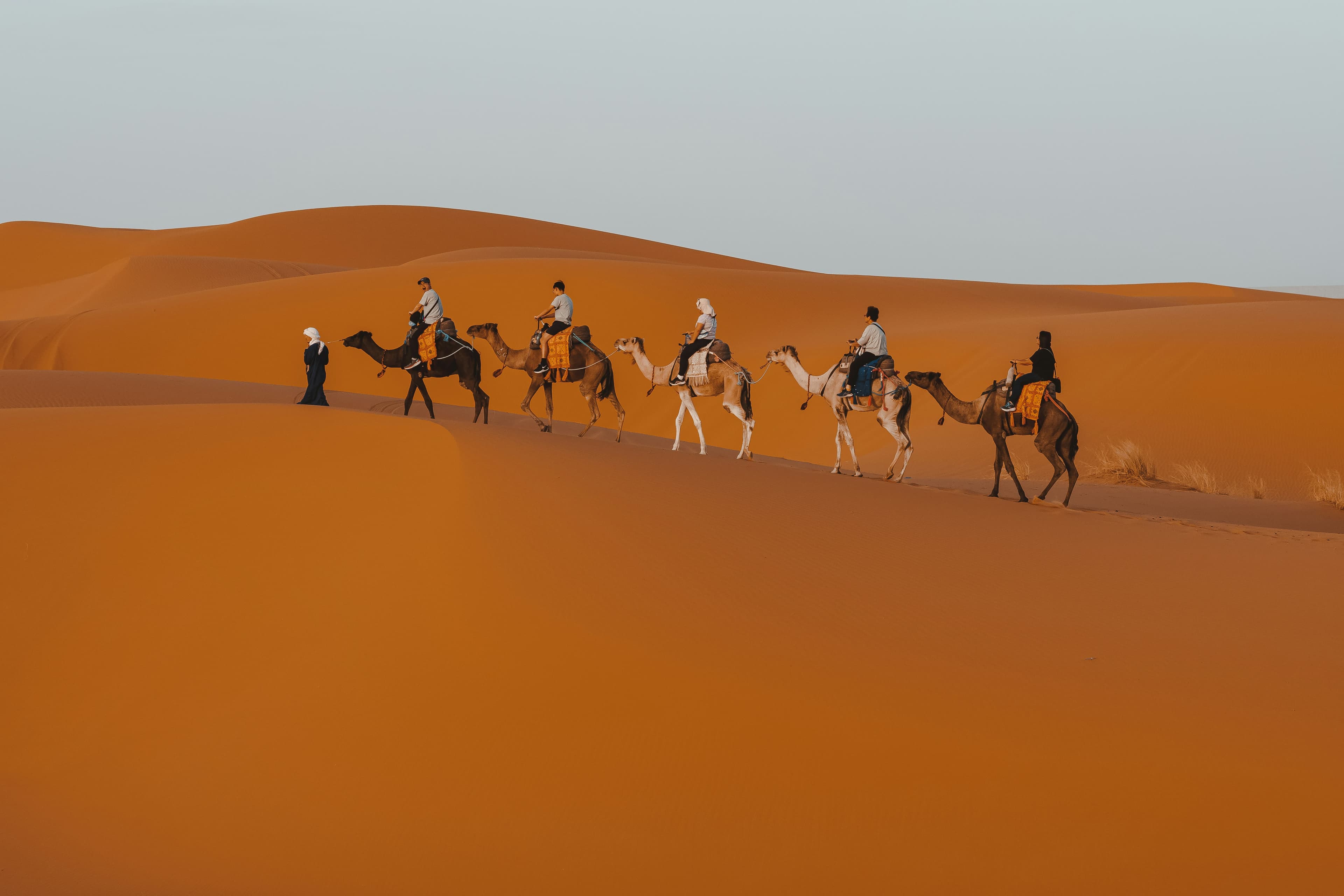
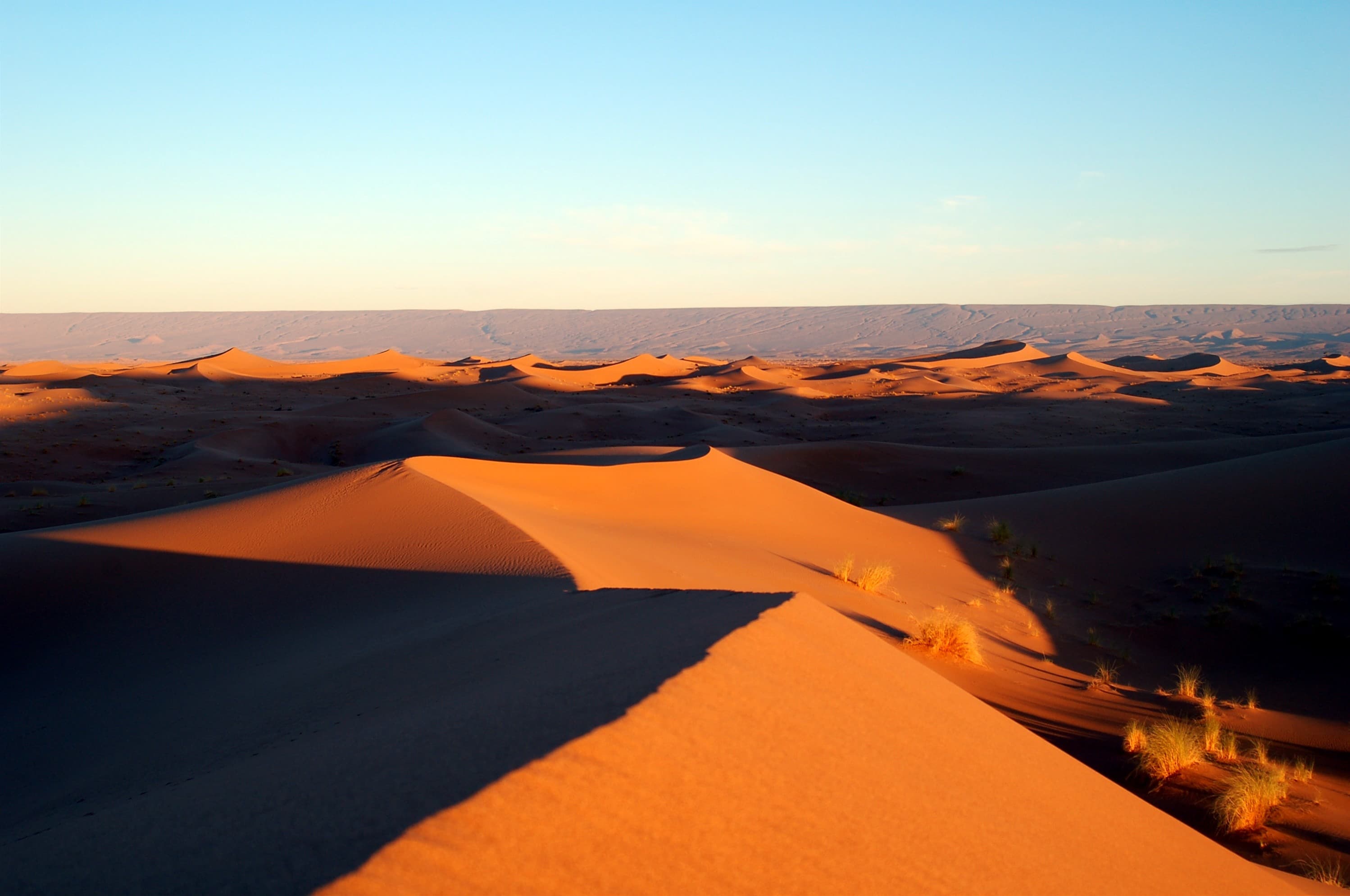
Merzouga is the last village before the sand. Beyond it lies Erg Chebbi, a field of dunes some twenty-two kilometres long and reaching around 150 metres at its highest — one of only two true ergs in Morocco, and the one everybody pictures when they picture the Sahara. The dunes change colour through the day: pale gold at noon, deep orange an hour before sunset, grey-violet at dawn. Camel caravans leave in the late afternoon so that you arrive at camp as the light turns, and the walk back out the next morning is done before the heat. Nights are the reason to stay. There is no light for a hundred kilometres in any direction, and the Milky Way is a solid band overhead. Camps range from simple canvas to tented suites with proper beds and hot water; Gnaoua musicians, whose ancestors came north across the desert, often play around the fire. Spring and autumn are the seasons. July and August reach 45 degrees by day, though the nights stay bearable. In winter the sand is cold after dark — bring more than you think you need.
Explore destination →Apples grow around Midelt, on a plateau between the Middle Atlas and the High Atlas. The eastern High Atlas rises beyond the town. Travelers on the road from Fez toward the desert pass orchards and farms before continuing toward Errachidia and the Saharan valleys. Farmers in the province irrigate fruit trees, vegetables and fodder crops. Barley and wheat grow on rain-fed land, and livestock are raised in the surrounding region. Outside the farming town, Aouli and Mibladen have former mine workings and miners' settlements beside a gorge and its river.
Explore destination →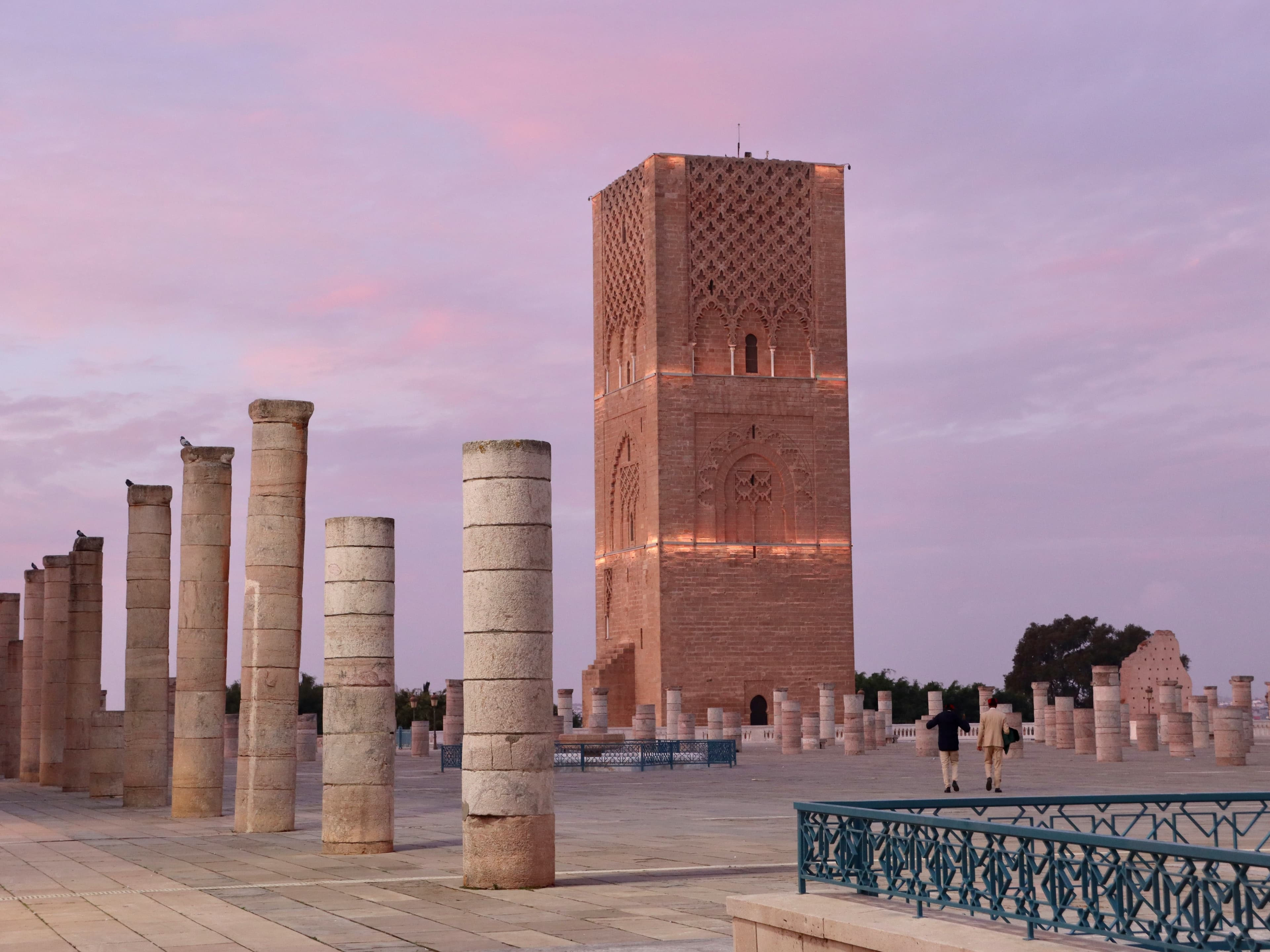
Rabat is the capital, and it feels like one: wide boulevards, embassies behind hedges, a calm that the other imperial cities gave up long ago. It is also, since 2012, a UNESCO World Heritage site — a rare case of a city listed for the way its modern and historic halves sit together. The Kasbah of the Udayas is the oldest part, a fortified quarter above the mouth of the Bou Regreg where the lanes are washed blue and white and end suddenly at the Atlantic. Below it, the Chellah is stranger still: a walled Roman town, then a Merinid necropolis, now half garden and half ruin, with storks nesting on the minaret. The Hassan Tower was meant to crown the largest mosque in the world. Work stopped in 1199 when the sultan died, leaving a half-built minaret and a field of 348 columns that never carried a roof — one of the most quietly moving places in the country. Rabat is an easy city to walk, and a good one to breathe in between Fez and the coast.
Explore destination →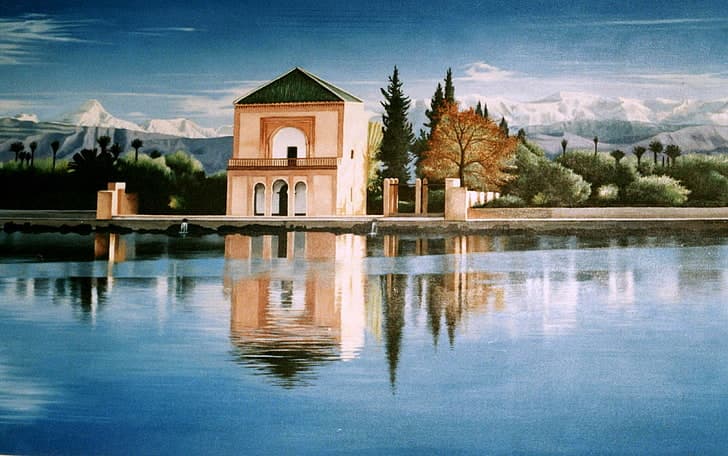
Tell us what inspires you, and we’ll connect the places into one unforgettable journey.