A place with its own rhythm.
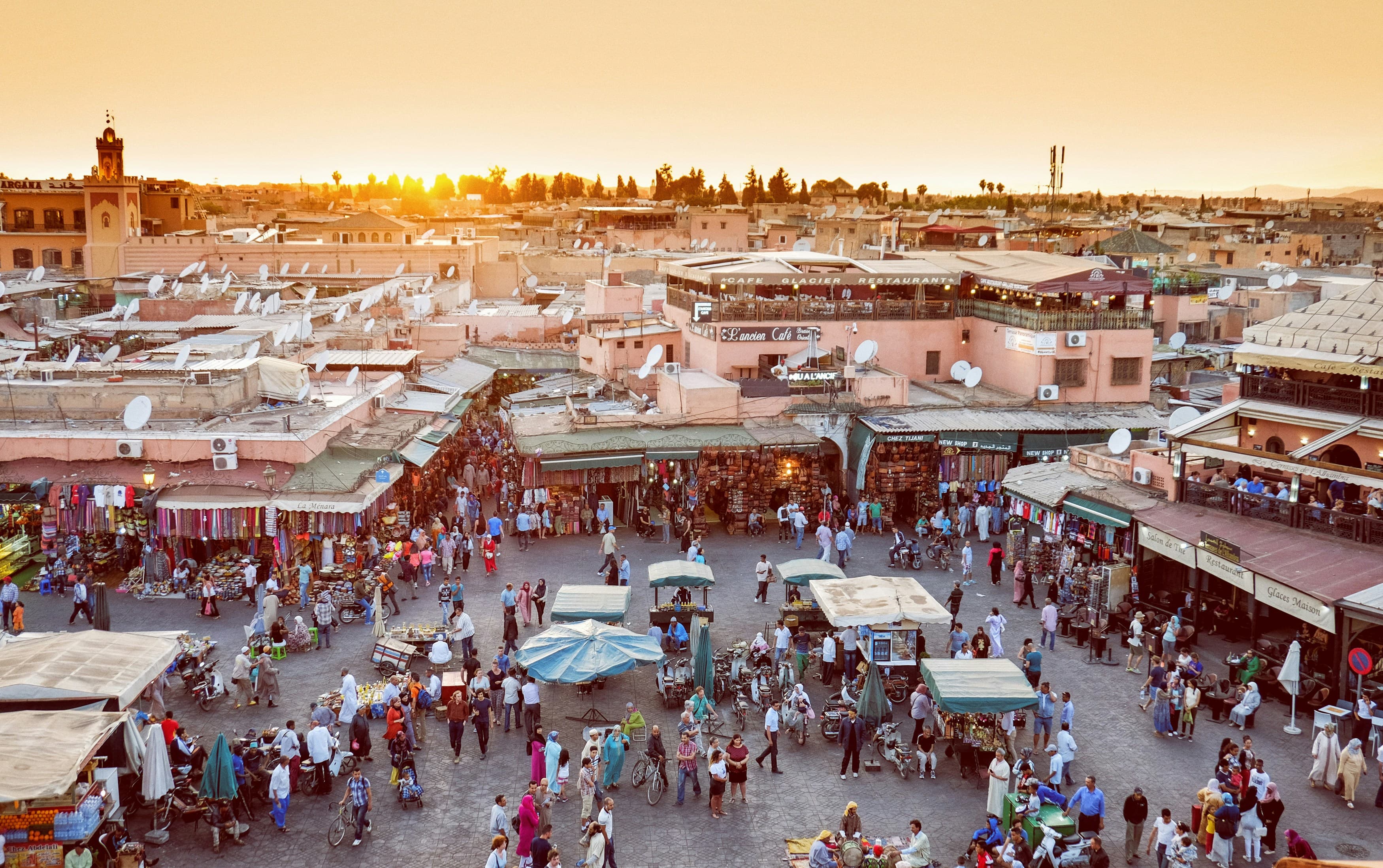
Marrakech does not ease you in. You step through a gate in the red walls and the city arrives all at once: the call to prayer over the rooftops, mopeds threading through alleys too narrow for cars, the smell of orange blossom and charcoal and leather. It has been doing this to travellers since the Almoravids founded it in 1070, and it has never seen a reason to stop. The medina is a thousand years of trade folded into a few square kilometres. Souks are grouped by craft, the way they have always been: dyers in one lane, coppersmiths in another, slipper-makers in a third. The Koutoubia minaret stands above all of it, the template for every tower Morocco built afterwards. At dusk, Jemaa el-Fna fills with smoke, storytellers, musicians and food stalls, and becomes something closer to theatre than to a square. Step through any plain door and the noise stops. A riad turns its back on the street and opens onto a courtyard, a fountain, a square of sky. That contrast — the uproar outside, the stillness within — is the city in one gesture. Beyond the walls: the Majorelle garden in its cobalt blue, the Saadian tombs sealed for two centuries, the Menara olive groves with the High Atlas rising white behind them. The mountains are ninety minutes away, and on a clear winter morning they look close enough to touch.
Journeys that visit here
Available trips
The destination
Moments from Marrakech
Where to stay
Accommodations in Marrakech
Riad Nesma
Riad · Marrakech
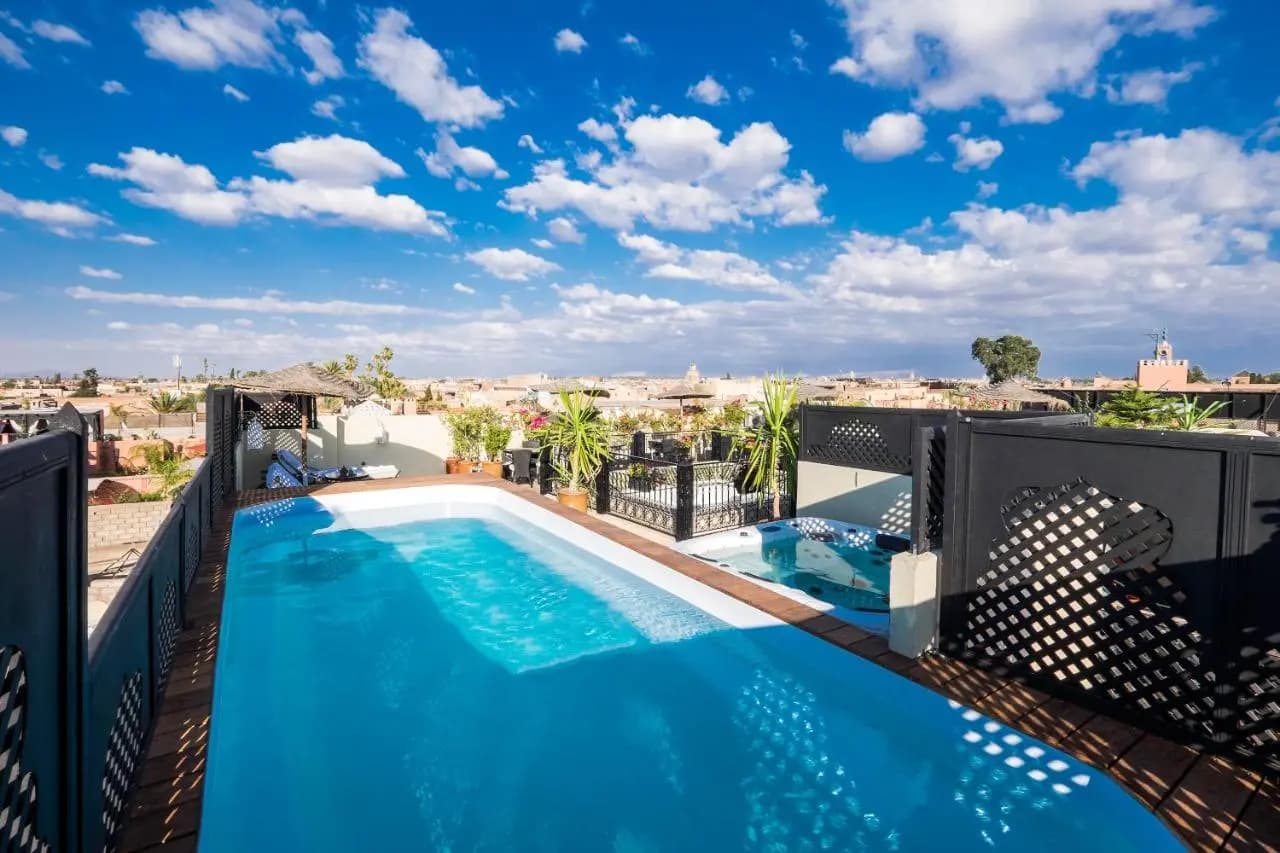
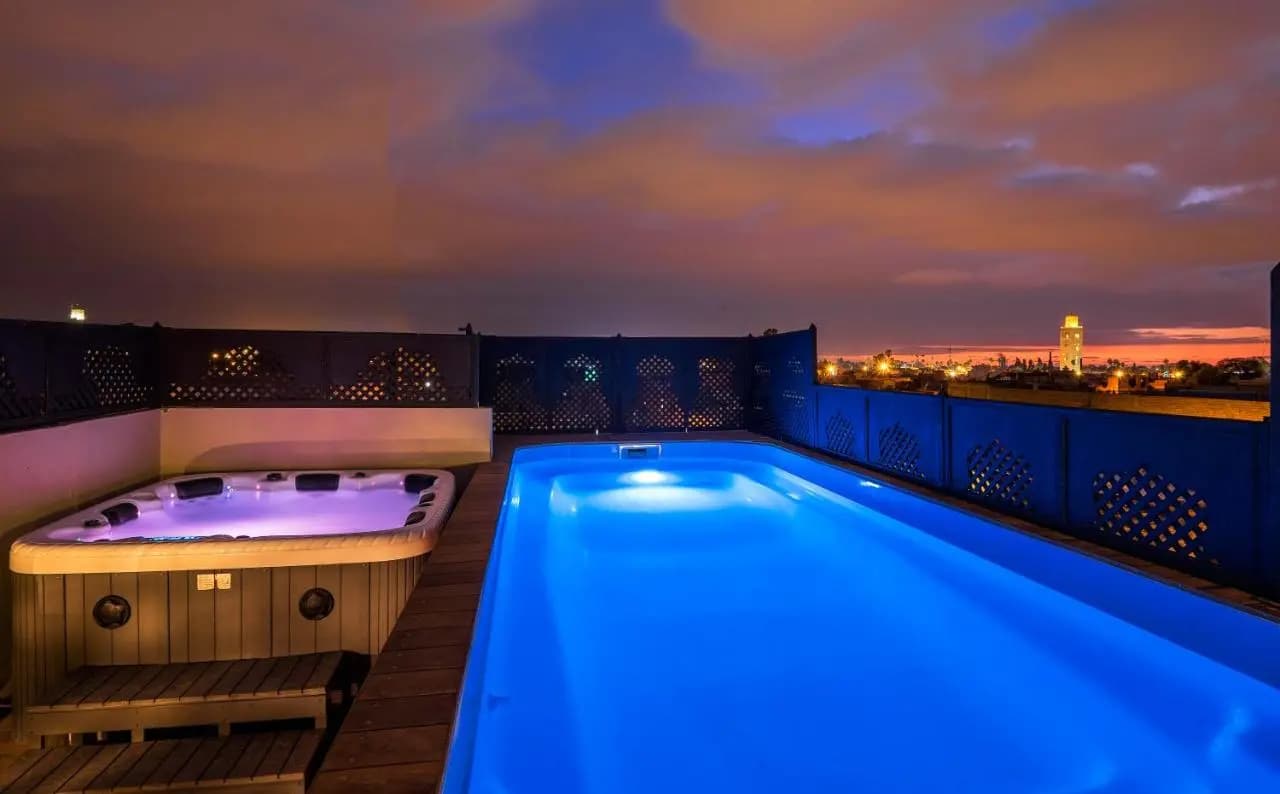
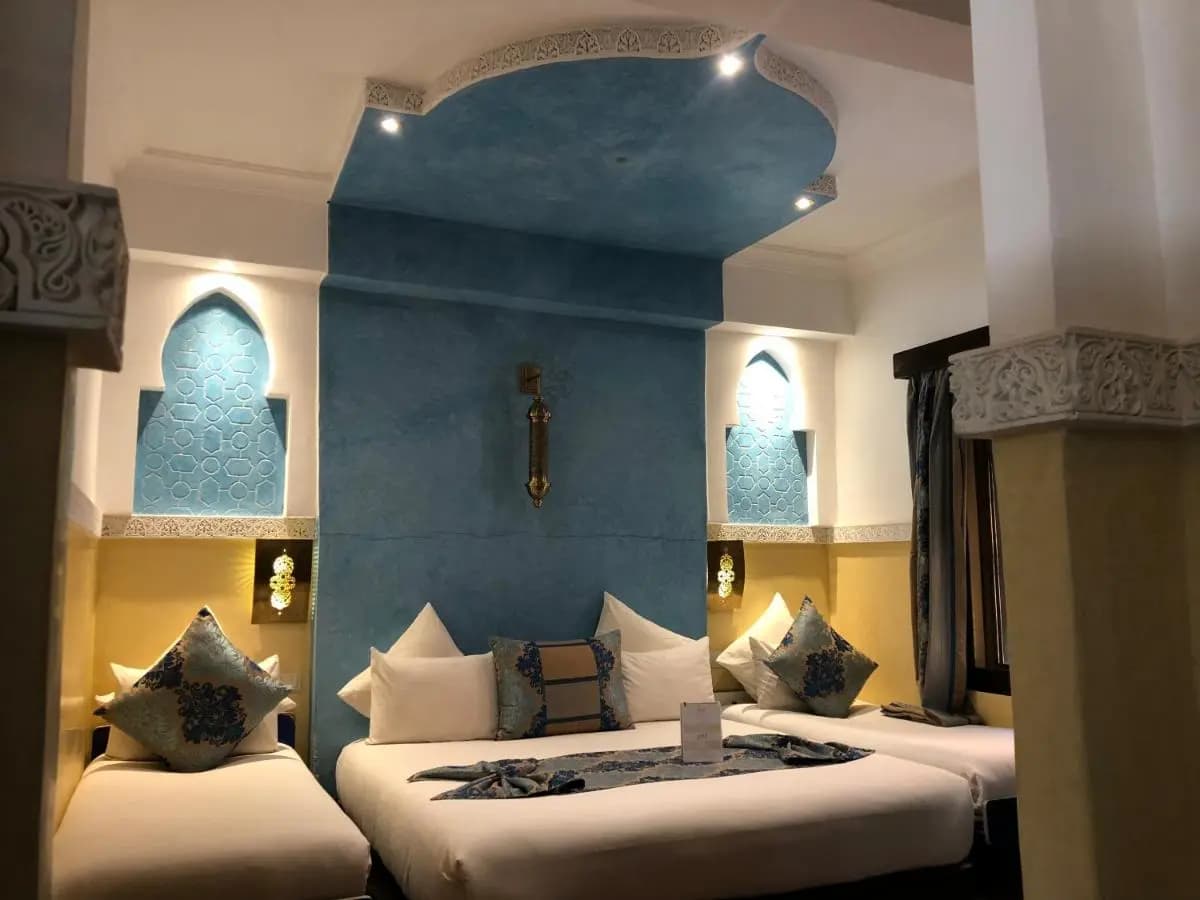
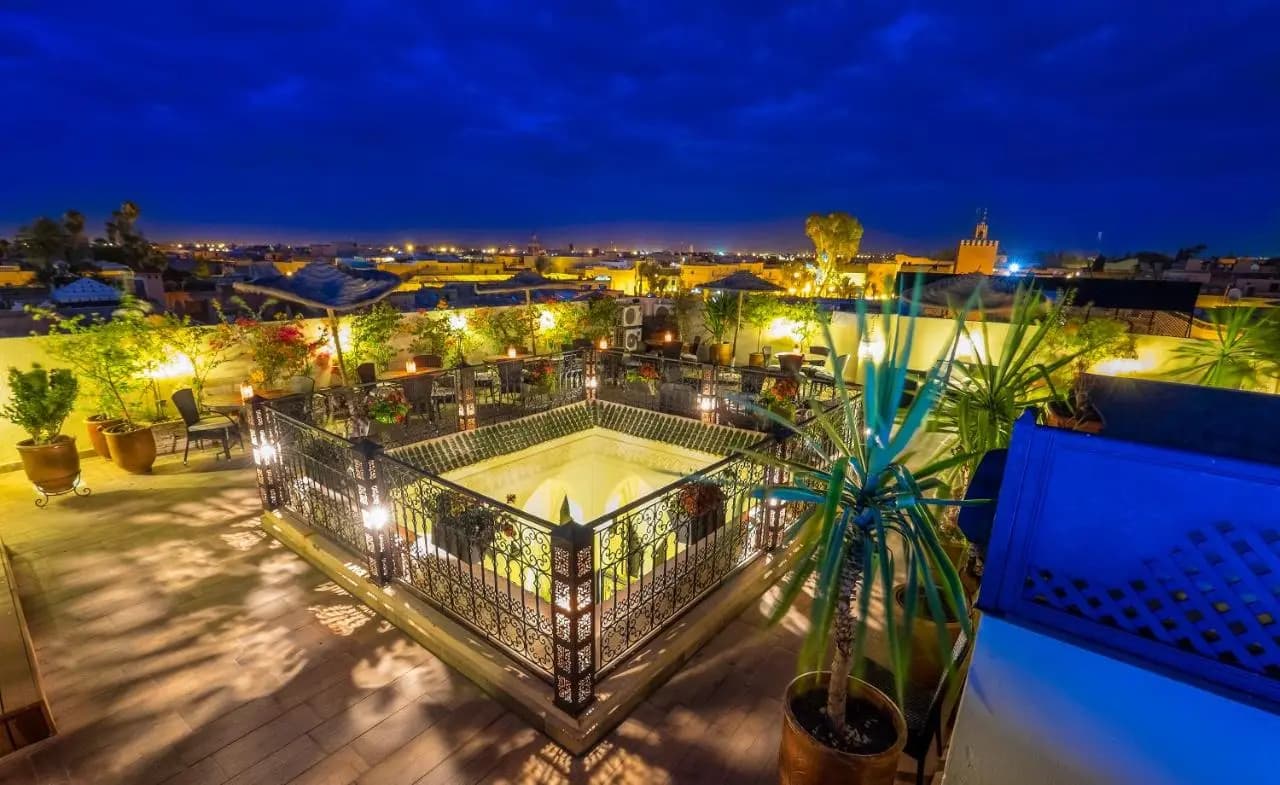
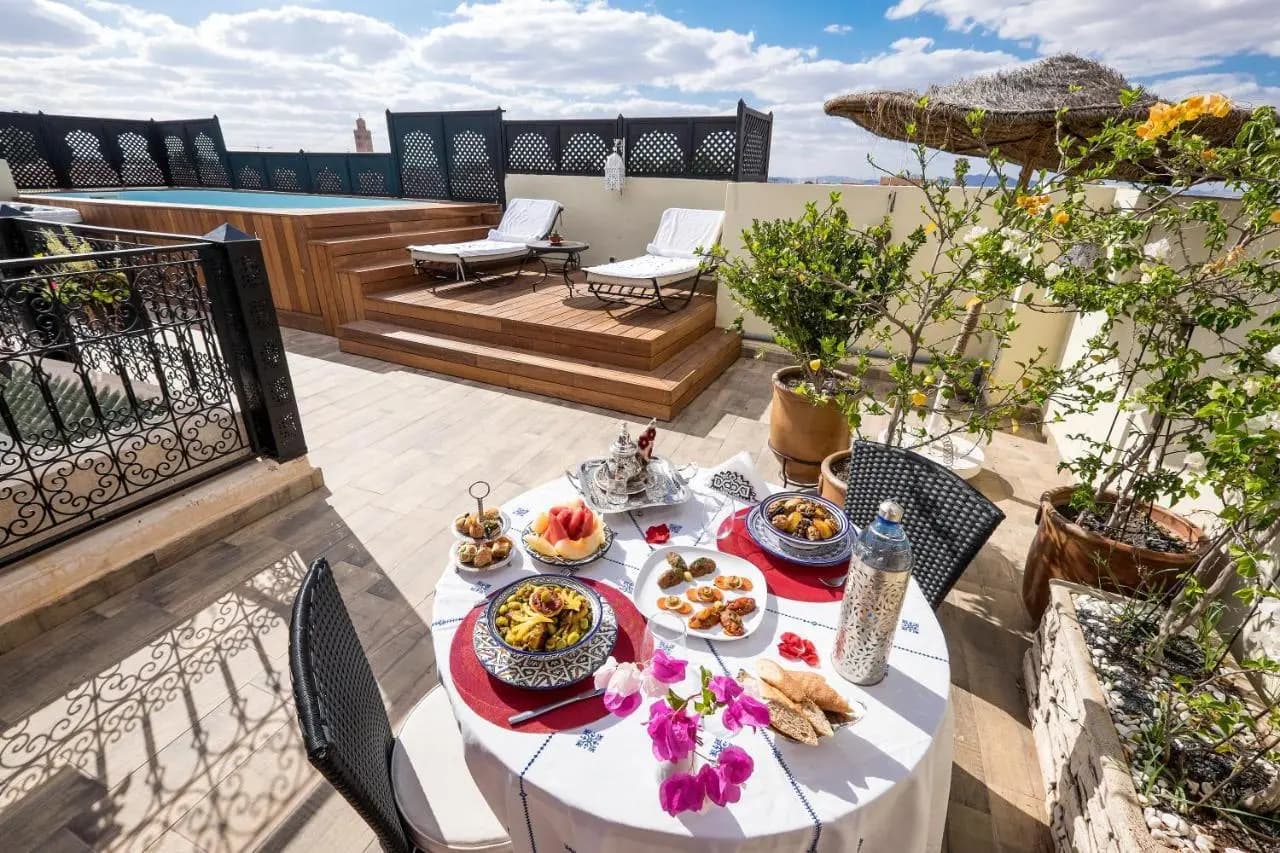
Riad Nesma stands on Riad Zitoun Lakdim in Marrakech’s medina. The house is organised around a courtyard, with a fountain in the shared patio. Its restaurant prepares Moroccan dishes. Guests can also eat on the terrace.